

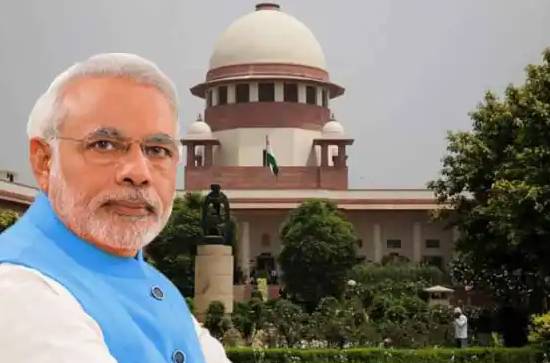
Article 370 was diluted and made ineffective by the Narendra Modi government in August 2019. More than four years later, the Supreme Court unanimously upheld the abrogation, a step that changed the history of Kashmir forever.
The J&K sovereignty fully ceded to the Union of India under accession, the court observed. It also added that elections in J&K will have to be held by September 30, 2024. Without giving a timeline, the highest court opined that statehood must be given at the earliest.
"There were no maladies in the exercise of power under Article 370(3) by the President of India to issue the August 2019 order. Thus, we hold the exercise of Presidential power to be valid," the SC judges, including the Chief Justice of India, said.
Senior Advocate Kapil Sibal reportedly argued that Article 370 was not a temporary provision after the dissolution of the Constituent Assembly of J&K. He is disappointed with the verdict. "Courts. Some battles are fought to be lost. For history must record the uncomfortable facts for generations to know. The right and wrong of institutional actions will be debated for years to come. History alone is the final arbiter of the moral compass of historic decisions," Sibal wrote on Twitter.