


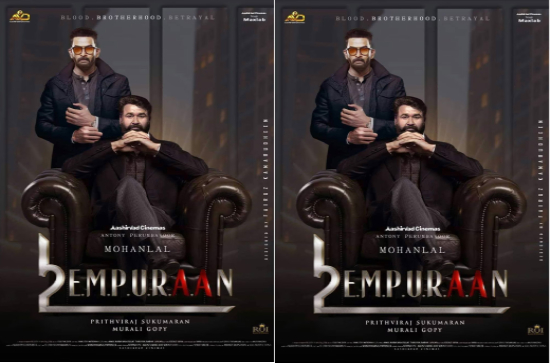
Mohanlal's highly anticipated "L2: Empuraan," the sequel to the blockbuster "Lucifer," has ignited a fierce political debate, forcing the superstar to issue a public apology and the production team to announce significant revisions. The controversy centers on the film's references to the 2002 Gujarat riots, which have drawn sharp criticism from right-wing groups and sparked a war of words across the Indian political spectrum.
The film's depiction of a villain seemingly inspired by the riots has been labeled "anti-Hindu" and "anti-BJP" by the RSS-linked magazine "Organiser," which accused the filmmakers of spreading divisive narratives. Former Infosys CFO Mohandas Pai further fueled the fire, calling the film "propaganda" and expressing his "shame" at Mohanlal's celebration of its success.
These accusations have been met with strong rebuttals from Congress and Left-leaning activists, who accuse the BJP of intolerance and praise the film for its "bold voice for justice." The political battle lines have been clearly drawn, with BJP state president Rajeev Chandrasekhar declaring he won't watch the film, predicting its failure due to "distorting the truth."
Faced with mounting pressure, Mohanlal took to Facebook to apologize for the "considerable distress" caused by the film's political and social themes, promising to remove the contentious references. The Central Board of Film Certification (CBFC) has reportedly ordered 17 changes to the film, including the removal of riot sequences and scenes depicting violence against women.
Despite the controversy, "Empuraan" has seen massive initial success, with a record-breaking number of shows in Kerala on its opening day. Chief Minister Pinarayi Vijayan even attended a screening, adding another layer of political intrigue to the saga.
The "Empuraan" controversy highlights the delicate balance between artistic expression and political sensitivity in Indian cinema. While the film's success demonstrates its audience appeal, the backlash underscores the potential for cinematic narratives to ignite powerful political and social debates. The revisions and Mohanlal's apology suggest a move towards mitigating the controversy while still delivering a compelling cinematic experience.